Chronic Pelvic Pain
Understanding "Rebellious" Pain
What exactly is it?
How to recognize it?

It's a real medical puzzle because it can involve several organs:
• Overlapping symptoms: There is often a mix of gynecological, urinary (painful bladder), and digestive (irritable bowel) problems.
• Central sensitization: The brain “learns” to experience pain and amplifies the signals, a bit like a volume control stuck at maximum.
• The emotional impact: The long wait for diagnosis (7 to 10 years on average) often generates anxiety or catastrophizing in the face of pain, which perpetuates the pain cycle.

What are the solutions?
We use the biopsychosocial model because a single pill is not enough:
• Neuromodulation: Some medications act on the nerve transmission of pain rather than on the organ itself.
• Pelvic floor rehabilitation: Physiotherapy helps relax the pelvic floor muscles that contract as a protective reflex.
• Digital tools: Use of tracking apps to help patients regain control over their daily lives.
• Supportive therapies: Cognitive therapies help “reprogram” the brain’s perception of pain.
Understanding the
Complexity of Pelvic Pain
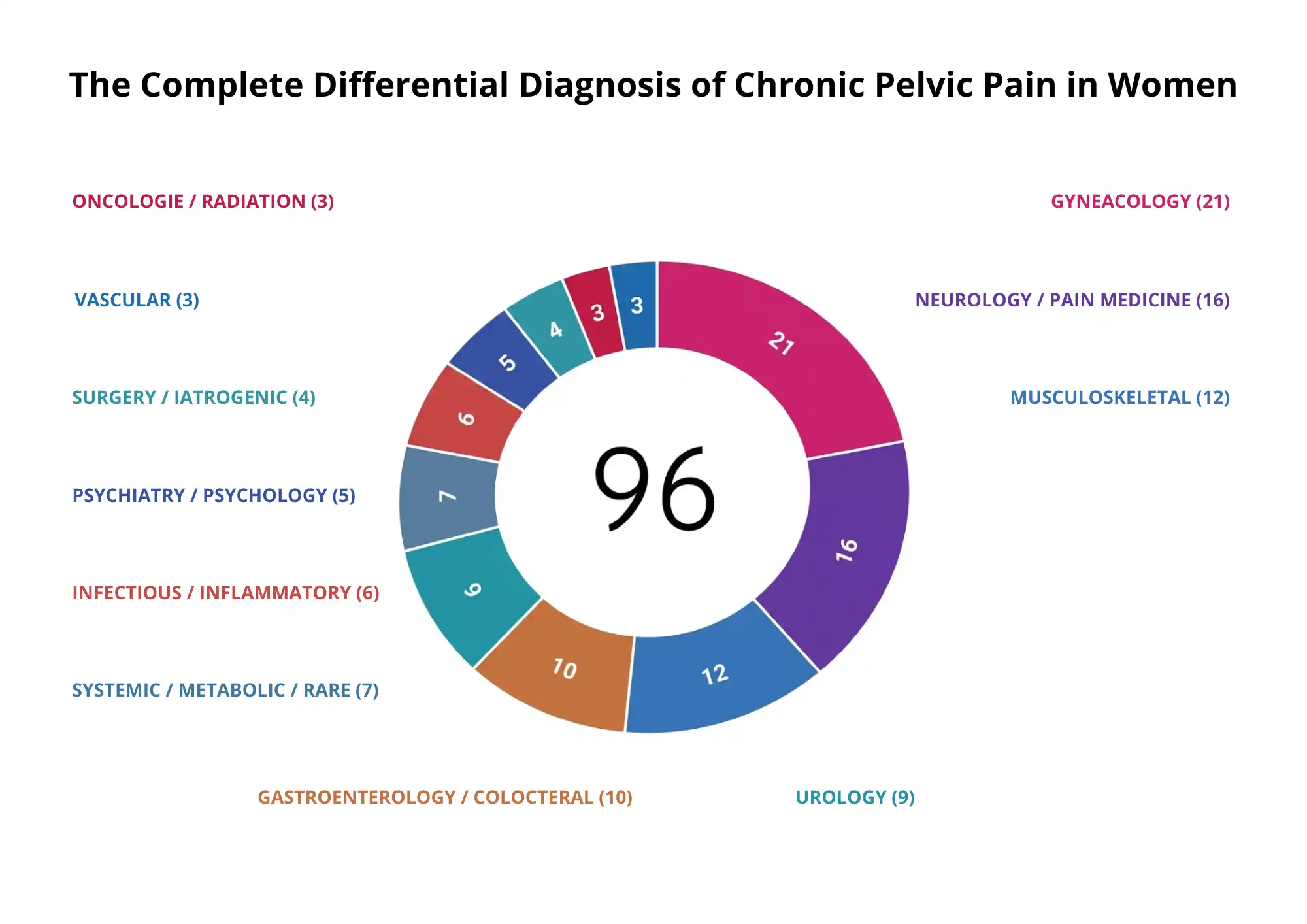
Chronic pelvic pain is a multifaceted condition that often goes beyond a single diagnosis. There are nearly 96 distinct disorders that can cause these symptoms, spanning across more than 11 medical specialties.
While gynecology (including endometriosis and adenomyosis) accounts for the largest share of diagnoses, many other factors can play a role:
- Neurological: Involvement of the pelvic nerves or central nervous system sensitization.
- Musculoskeletal: Dysfunctions of the pelvic floor muscles or joints.
- Digestive & Urological: Bladder or bowel disorders that often overlap with gynecological pain.
This diversity highlights why a multidisciplinary approach is essential. Identifying the precise origin of the pain is the first step toward creating a tailored and effective care plan for every woman.